The Bowes Museum Blog

Volunteering with The Blackborne Lace Collection
29 Jun 2026
When I saw the advertisement for a PhD studentship exploring The Blackborne Lace Collection at The Bowes Museum, I was desperate to be involved. At the time, I was finishing my undergraduate course in Conservation of Cultural Heritage, and looking for opportunities to further my experience before doing a master’s degree in Textile Conservation. After contacting the museum and meeting the supervising curator, I became a volunteer for the museum.
I was given the opportunity to work supporting Brooke Stephens, the PhD student, in the exploration and cataloguing of the Blackborne antique lace collection working towards the November exhibition Lace and Legacy: Fashion Treasures from The Blackborne Collection. Some boxes contained objects and samples that were displayed in the 2006 – 2007 exhibition Fine & Fashionable: Lace from The Blackborne Collection, and others were donated by the Blackborne’s descendants in 2007 with simply the labels of their locations within the family home. The label ‘Blackborne corridor by stairs’ does not give you much information on the lace inside but meant that the contents were an exciting mystery.
Working each day opening boxes that had not been opened for several years was very exciting. Every box held something new. Some boxes even held textiles from monarchs including King George IV’s undershirt with an embroidered monogram and samples of lace once belonging to Empress Eugénie. These were purchased by the Blackborne family in the auctions after their deaths.
One box also held photographs, flyers, letters and newspaper cuttings documenting the loaning of antique lace to actresses to be worn by characters in films and television series during the 1950’s. Others contained what seemed like hundreds of lace fans.
We spent months unpacking the contents of these boxes, identifying the lace samples and pieces inside and listing the contents.
This started with first determining whether the lace was handmade or machine made. Some lace is made with a machine net ground, with handmade decoration stitched to the surface. The handmade lace was then narrowed down into bobbin lace, needle lace, crochet lace, filet, or shuttle knotted tatted lace. The provenance then had to be determined, looking for motifs and styles such as Maltese crosses or Irish shamrocks. We could then understand the lace further and begin categorising them and further researching some pieces.
My Favourite Parts of Volunteering
As a volunteer conservator, one of my favourite aspects of exploring the collection was finding items which the Blackborne family had collected knowing that they would become historical garments in the future. This foresight showed the family’s passion for preserving history and their desire to contribute to that in the future.
Some of these items included lace trimmed camisols, bobbin lace trimmed split drawers and decorative nightgowns. These items all showed wear through stains and repairs indicating that they may have even been collected from the people around the Blackborne family. Additionally, historical undergarments and nightwear are not found in abundance due to the mundane nature of such garments and the fact that people would reuse textiles until they were simply domestic rags. This showed the intention of preservation behind the collection and labelling of the garments.
Volunteering with the Blackborne lace collection also allowed me to undertake surface cleaning of some lace and textiles and packaging them for better storage within the boxes. Though the Blackborne family had knowledge and skills in textile preservation, times change and the guidelines and science develop, meaning through even simple actions, I felt as though I am having some effect on preserving the collection which is very rewarding.
Volunteering also gave me the opportunity to network, meeting the freelance textile conservator who works with The Bowes Museum’s collection, and researchers from the Nottingham Trent University lace archive. This helped me build connections within the sector and develop a further understanding of museum practices.
Brooke’s Perspective
The Blackborne collection is comprised of around 7000 items of lace dating from the sixteenth to the early twentieth centuries, with the majority of items having never been catalogued. The sheer quantity of the collection makes cataloguing and researching the collection a daunting task for anyone. Working with Holly on the collection has allowed us to sort through nearly all of the uncatalogued collection over the span of several months instead of the few years it would have taken me to accomplish on my own. Sharing the task of listing the undocumented part of the collection with Holly has meant I am able to begin my research into specific pieces within the collection far sooner than expected, which is very exciting. Holly has also been a major asset due to her background in conservation, an area I have no training in. Sorting through five-hundred-year-old lace that hasn’t left its box in many years is a much more manageable task when working with a volunteer conservator.
Connecting with the Skills of the Collection
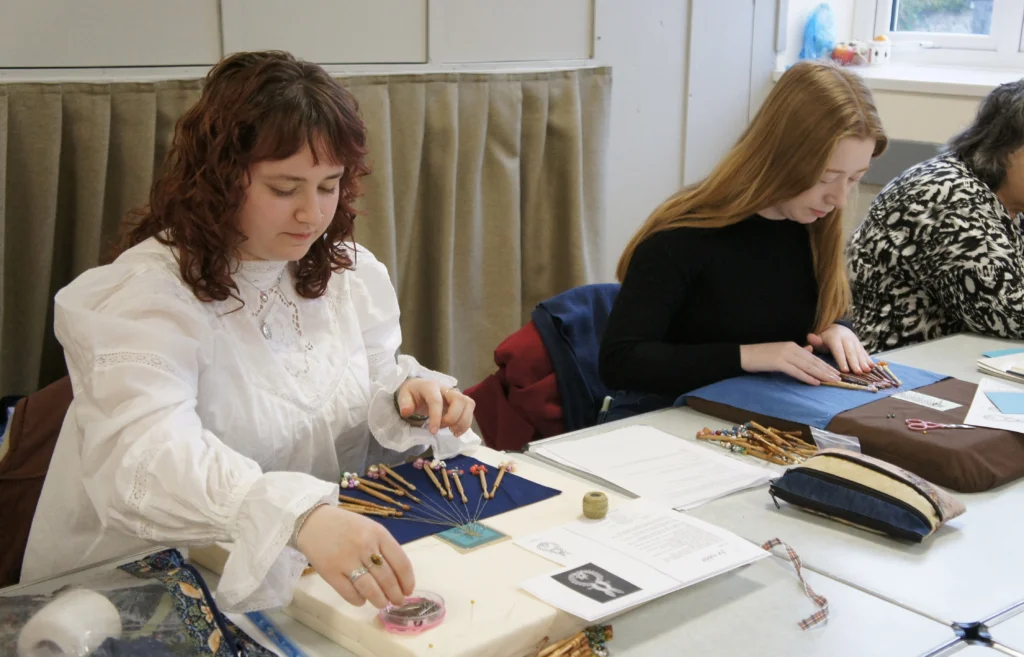
Brooke and I also had the opportunity to learn the craft of lacemaking from the experienced teachers of Northumbria Lacemakers to support our work at The Bowes Museum.
Learning the movements and stitches used to create the bobbin lace samples we were studying gave us further knowledge for the identification of the Blackborne antique lace, and a new appreciation for the creators behind the incredible textiles. This also allowed us to spread the word of the exhibition amongst local and national lacemakers with the exhibition being mentioned in the lace newsletters and online conferences.
Written by Holly Ewart, 2026
Related posts
All posts
Meet Gallery Storyteller, Karen
When you’ve worked all your life, brought up a family and find yourself with spare time on your hands, its often hard to know what to do with it. Well, that was me almost a year ago. After a career in PR and communications had come to a natural end, I wanted a volunteering role
Meet Event Volunteer and Activator, Sue
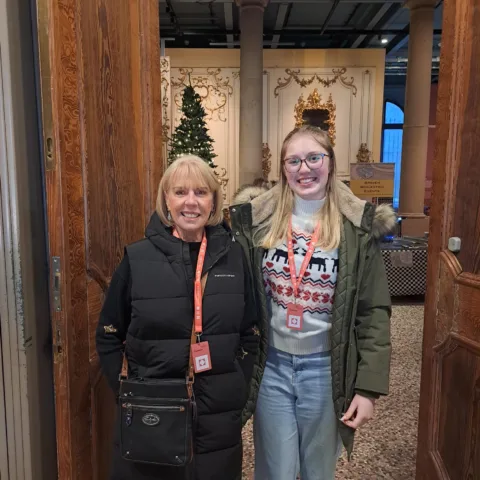
My interest in The Bowes Museum began following a visit to the Winter Market in December 2023. Due to inclement weather on this particular day, the outside stalls were moved inside. I was amazed at how beautiful and interesting the museum was and whilst I thoroughly enjoyed the Winter Market, I found myself browsing the
Meet Conservation Volunteer, Debbie
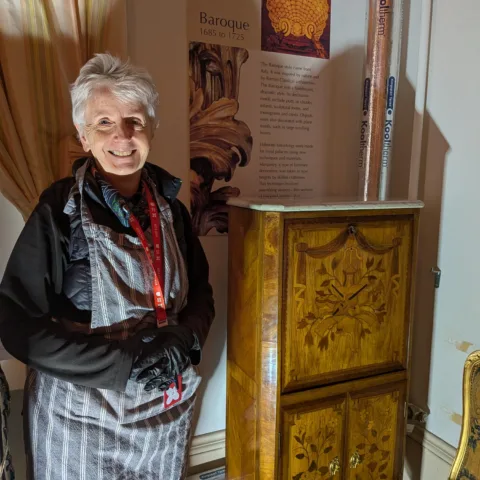
Working in Preventive Conservation as a Volunteer I’m part of a small group of volunteers who undertake preventive conservation at the museum, under the direction of Joe Kinsey, the Collections Coordinator. We carry out a varied programme of activities specifically targeted at maintenance and preserving the museum’s extensive collection. I started in October and so



Monet – The Sea at Fecamp Jigsaw
£19.95
IOL Poplars Magnet
£3.95
IOL Tote Bag Aubertin
£14.95
IOL tea towel – Monet sea
£11.50
IOL tote bag Mowers
£14.95
SIGN UP TO OUR NEWSLETTER